
In short
- Outsourcing IT means an external partner takes responsibility for all or part of IT operations.
- A lack of expertise, vulnerable operations and too much time spent on IT are typical signs that it is time to outsource.
- You get broader expertise and better preparedness, but give up some direct control.
- An external partner can also strengthen your own IT department instead of replacing it.
- Choose a partner that gives you a full overview, a dedicated contact and documented experience.
What does it mean to outsource IT operations?
Outsourcing IT operations means handing all or part of the responsibility for your company's IT to an external partner. It can cover everything from user support and setting up PCs to operating cloud services and monitoring security. You decide how much the partner is responsible for.
Three signs that it is time
- The first sign is a lack of expertise. Microsoft 365, Azure and the threat picture change all the time. With only one or two people responsible for IT, it is demanding to keep up in every area.
- The second sign is vulnerable operations. If all IT knowledge sits with one person, a lot stops during illness, holidays or a resignation. Unwanted incidents do not always happen within working hours either.
- The third sign is that IT takes too much time. When managers and specialists spend hours on new hires, licences and user support, the core business suffers.
Pros and cons: an honest review
The biggest advantage of outsourcing is access to a broader pool of specialists than you can build yourself. You get more expert knowledge, more time and better preparedness. At the same time you get better control of IT costs.
Outsourcing also has drawbacks. You give up some direct control and depend on the partner delivering. The partner is not necessarily in the same premises as you either. The transition itself also takes time, because the partner has to get to know your systems.
What does this mean for you? Many of the drawbacks come down to which partner you choose. Clear reporting and a dedicated contact usually ease the drawbacks of both the transition and day-to-day operations.
Internal IT, external partner, or both?
Outsourcing does not have to be either-or. Do you have someone responsible for IT who knows the business well but lacks capacity? Then a combination may be the right answer. The partner takes care of day-to-day operations and monitoring, while your own IT lead gets time to work strategically.
This is how we work. We strengthen your own IT department with more expertise, more time and better preparedness. It is an approach we see working well, where customers get the best of both worlds and we build long-term partnerships together. SATS, for example, has been a customer of ours since 2018. Would you like to see what they and other customers have experienced? Read our customer stories.
How to choose the right partner for IT outsourcing
When comparing providers, look for the following:
- Expertise in the platforms you use, such as Microsoft 365 and Azure.
- Preparedness outside working hours too.
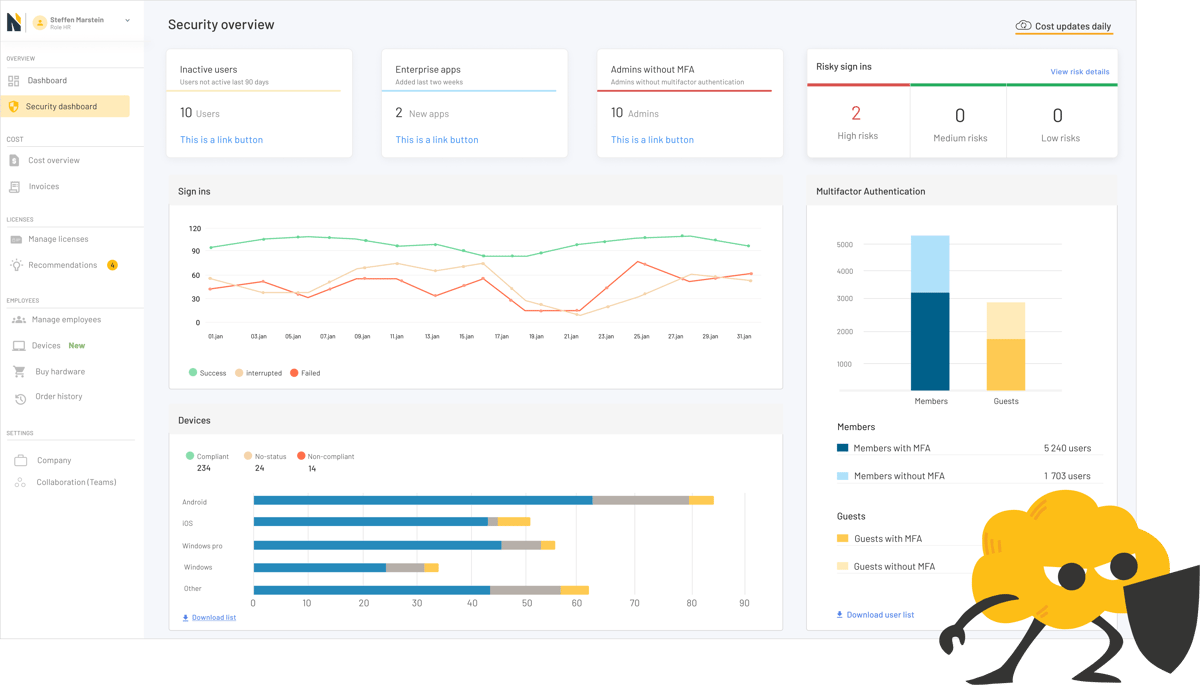
- A full overview of the IT environment, the costs and the security.
- A dedicated contact who knows you.
- Documented experience from customers similar to you.
As a Microsoft Tier 1 partner, one of very few in Norway, we give you access to the highest level of expertise from Microsoft. You get admin support around the clock and a Technical Account Manager (TAM), a dedicated contact who follows you up. In the Ironstone portal you have a full overview of the IT environment at all times. See all our IT services.
Do you know where you stand today?
Before you decide, it is wise to know how well your IT environment works today. In an M365 Assessment our experts go through licences, security, sharing and operations in Microsoft 365. Get a free assessment of your Microsoft 365 environment.
Do you have questions about outsourcing IT? Feel free to contact us for a no-obligation chat.
Frequently asked questions about outsourcing IT operations
What does it mean to outsource IT?
It means handing all or part of the responsibility for your company's IT to an external partner. It can cover user support, operating cloud services and monitoring security.
What are the advantages of outsourcing IT?
You get access to a broader pool of specialists, more time and better preparedness than you can build yourself. You also get better control of IT costs.
What are the drawbacks of outsourcing IT?
You give up some direct control and depend on the partner delivering. The transition also takes time. Clear reporting and a dedicated contact ease several of the drawbacks.
Can you combine your own IT department with outsourcing?
Yes. The partner can take care of day-to-day operations and monitoring, while your own IT lead works more strategically.